
Introduction
The unexpected emergencies are impossible to predict, but preparation of your house for these cases will allow your family to respond to emergencies safely. Fires, weather conditions, power outages, water shortage, and other emergencies may affect the regular functioning of your house. In such a way, preparation for these emergencies will assist in efficient handling of the problem.
To begin with, it is important to define what kinds of emergencies can occur in your house and the measures which should be taken. It is necessary to make the list of contacts, the way to leave your house, and the place where all the family members should meet outside the house. The members of your family should know how to escape from the building and where to go if you are separated from each other during the emergency.
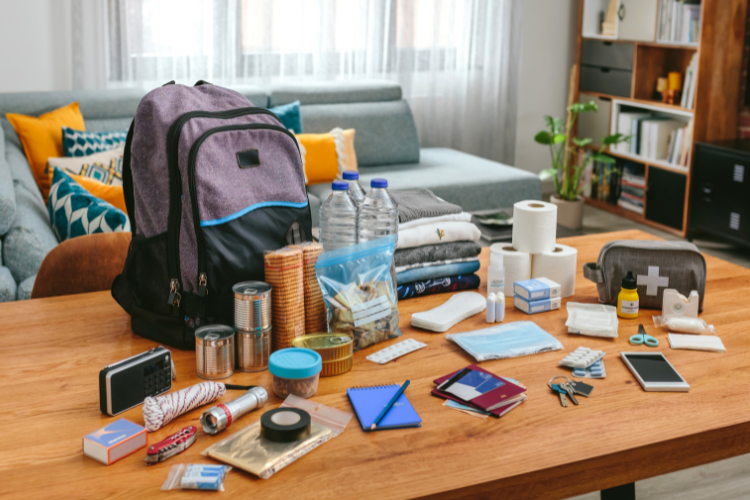
The second point is preparation of the emergency kit containing the necessary items. The emergency kit can contain water, non-perishable food, flashlights, extra batteries, first aid kit, hygiene products, phone charger, and other things that can be needed during the disruption of everyday life. In case if you have kids or pets, you should think about their special needs.
The preparation of the house for the emergency also implies the control of the security equipment, such as smoke detectors, electrical appliances, doors, windows, etc. All the corridors, stairs, and other exit routes should be clear to leave the building in case of an emergency. Important documents and emergency contacts list should be easily accessible.
Finally, it is necessary to prepare your kids to any possible emergencies. You should explain the safety measures to your children corresponding to their age. Tell them where to find you in case of an emergency and practice the emergency plan.
Thus, this guide will help you to understand how to prepare your home for the emergencies. With certain preparations, supplies, safety checkups, and practicing of the emergency plan by your family members, you will increase your safety in case of emergencies.
Emergency Kit
The creation of an emergency kit is an essential part of making your house prepared for anything that may happen in the future. It will be hard for you to access water, food, or energy sources in case of power outage, heavy weather conditions, floods, fires, or any other kinds of unexpected things. All these reasons speak in favor of the fact that keeping everything you need in one place will allow your family to handle the problem much easier.
A typical emergency kit should include drinking water and enough food that does not expire quickly and does not require some kind of preparation. Do not forget to monitor the expiry dates and replace all the stuff that has already expired. A flashlight and extra batteries will be useful for the period of power outages, and a battery or hand-cranked radio will let you get the most actual news in case of the loss of electricity or internet connection.
The kit should also include first-aid supplies. You may find there adhesive bandages, sterile gauzes, tapes, antiseptic products, disposable gloves, and other things that are useful in emergencies. You should store all the regular medications properly.
There are many additional supplies which may prove useful in emergency conditions. Among them you may find some blankets, hygiene products, manual can opener, phone-charging equipment, masks, copies of all the necessary documents, and some emergency money. In case of children, elderly people, pets, or some other special conditions you should prepare additional supplies.
It is necessary to put the emergency kit in a place which is dry and easily available to everybody who lives in your house. Also, do not choose the place which can become inaccessible in case of the emergency. Moreover, it may be useful for you to have smaller kits in other parts of your house depending on its peculiarities.
It is better to check your emergency kit from time to time and change food, damaged equipment, used first-aid supplies, and batteries. All the members of your family should know the place where you have put your emergency kit and how to use it.
Important Documents
Organization and protection of necessary documents are vital components of emergency preparation. In the case of a fire, flood, harsh weather conditions, and any other sort of emergency, looking for the necessary documents will be problematic because the family will already be stressed by the situation. Thus, preparing all the documents beforehand will save time.
The necessary documents can be of different kinds – identification documents, passports, birth certificates, property records, insurance information, medical records, bank information, information about emergency contacts and other documents that will be hard to obtain afterwards. Make a list of the necessary documents and keep track of them to update the information regularly.
Original documents should be kept in a secure and protected place. Paper records that are important should be stored in a place that is not prone to water, fire, or moisture exposure. A fire and water-resistant protective box can be used to store them. Not all the important documents should be stored in one place and be easy to access.
Digital backup will help you have a spare copy of the document. All the necessary documents should be scanned and copies kept in a safe place on a device or some kind of protected cloud storage service. Use strong passwords and other necessary security measures in order to protect the documents. It would be ideal to keep another backup somewhere else.
Emergency contacts should be also accessible. This information includes the most important contacts in the family, contacts of the insurance company, utility providers, medical information and local emergency services contacts. Such information may come in handy in case you do not have your phone or it is dead.
The important documents should be updated on a regular basis to make sure that the information remains correct. Check your insurance policies, your identification documents, your contacts and other important data. Do not share the sensitive documents and do not give access to them to the people who you do not trust.
Flashlights
A flashlight is a basic emergency item which can become very important in case of a power outage, storms, fires and any other events when conventional sources of light fail to work. Unexpected blackout makes hallways, staircases and rooms dark, which creates additional risks for people to trip and fall. Having functional flashlights available to all the family members will allow them to navigate safely in the darkness.
It is recommended to have at least one operational flashlight at your home; however, keeping a couple of them would be even better. Flashlights should be stored in places which are easy to access – in bedrooms, kitchen, near the emergency kit and so on. It is better not to store flashlights in hard-to-reach cupboards or places where it might become impossible to get to in case of an emergency. Family members should know the location of all the flashlights in the house.
It is crucial to check whether flashlights are in order from time to time. In case if the flashlight uses replaceable batteries, it is necessary to keep extra batteries and replace old and leaky ones. Some models of flashlights have rechargeable batteries, and it is important to keep them charged from time to time. Choosing simple flashlights that anyone can use would be a good solution.
It can be useful to store flashlights close to each sleeping place so that family members would not need to walk through a dark home to find a flashlight. Additionally, a small flashlight can become useful in case of traveling by car or keeping in an emergency kit. Depending on the needs of the household, there can be lantern-type of lights illuminating a room, or smaller flashlights, which can be moved around.
Candles should be avoided as an only source of light in the absence of electricity, because they create open fire, which is dangerous in case of children, pets, curtains, papers and other flammable objects. Battery-powered lights do not create an open fire.
Flashlights are to be kept together with the rest of the emergency items, along with batteries or charging devices. Checking flashlights regularly and replacing any dysfunctional items becomes an important part of reviewing emergency supplies.
Flashlight might seem as a very basic thing, but having lighting in case of emergency will mean a lot.
First-Aid Supplies
First-aid kits are crucial for emergency preparedness. Some of the injuries that can occur everyday include cuts, abrasions, burns, sprains and so forth; in addition, there can also be serious emergencies that would render it difficult for the family members to move out to buy the required supplies or visit a medical facility. With first-aid kits, family members can act fast to injuries and later seek medical attention.
The following are items that one needs to have in his/her first-aid kits: adhesive bandages, sterile gauze, medical tapes, antiseptics, disposable gloves, scissors, tweezers and necessary wound-cleaning supplies. It would also be wise to include a digital thermometer and some basic supplies. Medics should be kept properly and taken according to their labels or as advised by the health care provider.
Supplies should be stored in a dry and clean place that should be easily reachable. However, medicines and sharp objects, together with other supplies that can pose danger to kids, should be stored safely. It is important that every adult and older children within the house are made aware of where they are stored and how to use the basic supplies.
It is wise to check the supplies periodically rather than after the emergency occurs. One will be required to replenish the used up bandages, those that have expired, broken down and other missing supplies. Checking some of the labels since they contain the expiry date or storage conditions of the manufacturer is also important. Having the inventory of the items is also very important to ensure easy replacement of the required items.
It would also be wise to have some medical information available in the right places. This can involve emergency contact numbers and the necessary medical information like the allergic reactions and so forth.
In conclusion, first-aid kits are not meant to replace professional medical help. Emergencies like severe bleeding, breathing problems, severe burns, unconsciousness, injuries, poisoning and so forth require proper emergency services.
A first-aid kit can be quite helpful during an emergency situation.
Emergency Contacts
Organizing emergency contacts is another step in organizing one’s home in case of any unexpected situation. In a situation of a fire, medical emergency, weather situation or any other disaster people get stressed and have problems remembering any numbers that they need to call. Preparation of a contact list can help in contacting the required people faster.
First of all, you should compose a list of contacts that can be needed in case of any emergency in your house. It can include numbers of local authorities, hospitals, neighbors, family members, doctors, insurance agents, utility companies and any other organization that can be needed during an emergency. Make sure that the information about phone numbers and other contacts is correct and update it from time to time.
Relying on the contact list of your phone can be a bad idea as it can be damaged or not charged. Therefore, you should print out the list and keep it at hand in case of necessity. One of the printed lists can be kept in the household emergency kit.
Children also need to know some emergency contacts depending on their age. Explain them how they can call authorities and what information they should give (name, location, type of emergency). Also, children should know whom they can contact among the trusted adults in case their parents are unreachable.
Sometimes it is useful to choose an emergency contact who doesn’t live nearby. As sometimes it can be difficult to contact local authorities because of heavy traffic of calls, calling a person who lives further can be easier. The whole family should discuss how they will communicate in case of any emergency and where they will meet.
Check your emergency contact information periodically and delete unnecessary numbers and add those contacts that become needed. Make sure that every responsible family member knows where the updated list can be found. Be careful with your personal information and don’t share it unless it is necessary.
Family Plan
An emergency plan will ensure everyone knows what to do in case an unforeseen circumstance arises. Fires, bad weather, power outage, floods, or other emergencies might arise, which would create confusion. However, planning how to handle any potential emergency situation before it happens will make it easier for family members to react calmly and safely.
Identify what emergencies could potentially take place in the home and decide how all family members should exit. Identify two or more ways how everyone should get out of the house in case of an emergency. Select an external meeting point where everyone will gather once outside of the house. Clear all hallways, doors, staircases, and escape routes to enable everyone to use them quickly in case of need.
Everyone in the family should be aware of all emergency contacts. The adults should always have access to necessary phone numbers. Moreover, teach all the children how to contact emergency services once they become old enough. It would be helpful to select an emergency contact person who lives outside of the local area in case the family gets separated.
Take into consideration the specific needs of all individuals in the household. Special attention should be paid to young children, older adults, mobility-challenged individuals, and pets. Decide on how you are going to help them in case of an emergency situation and prepare the necessary items for this purpose.
Train the family to follow the plan and make them familiar with all the basics of the emergency plan. Make the children practice how to leave the house and reach the meeting point in case of an emergency. Teach adults how to turn off the utilities if it is safe and feasible to do this.
Prepare the written version of the plan and keep it easily accessible. Review it in case of any changes in the household’s situation. Change emergency contacts, meeting places, escape routes, and emergency supplies accordingly.
Even though the emergency plan cannot protect from any disaster, it can save the time and prevent the confusion in critical situations.
Don’t miss this related post:
Home Energy Efficiency: 7 Easy Ways to Save Energy
Electrical Safety: 7 Common Mistakes to Avoid at Home
Home Safety: 7 Simple Tips for a Safer Home for Children
Home Safety: 9 Essential Tips Every Family Should Know
Conclusion
Preparation of your household for any emergencies is an integral component of ensuring your family’s safety and minimizing chaos in case of an unexpected event. Fires, power outages, severe weather conditions, flooding, or any other emergency might occur unpredictably, but being well-prepared will help you cope with the situation better.
The contents of an emergency kit may include, among other things, drinking water, non-perishable food supplies, flashlights, first aid kit, hygiene products, and other supplies which would fit your family’s needs. It is advisable to have a safe copy of all important documents on hand. Regular checks and maintenance of reliable flashlights will ensure you have sufficient illumination in case of power outage.
First aid kits will be useful in case of small injuries, while the updated list of emergency contacts will be helpful in reaching your relatives, medical services, emergency responders, and other important people. These contacts should be kept somewhere convenient and not only in one cell phone of your family.
Family emergency plan includes all mentioned components. Family members should be aware of basic escape routes, meeting place of your family, important contacts, and ways of responding to different emergencies. Children should know elementary safety rules and participate in drills of their family emergency plan.
This preparation should be revised from time to time. You should check your emergency supplies for expired or damaged goods, update your important information, and revise your family plan according to new conditions of your household. Ensure accessibility of emergency equipment and supplies.
Being prepared for an emergency does not mean you expect something bad to happen. It means you take reasonable measures to deal with unpredictable events.