
Introduction
Difficult stains are an everyday issue for many families. Various types of spills may leave obvious stains on fabric, flooring, furniture, walls, and kitchen surfaces. Some stains are removed easily when they are removed immediately. Others become much more challenging once they are dried out and absorbed into the fabric.
For successful stain removal, it is necessary to take careful and appropriate actions. If a stain is rubbed too aggressively, the stain may spread or move deeper into the fabric. Also, strong cleaning products may discolor the surface and cause damage to it. As a result, testing cleaning solutions on a small spot first is strongly recommended before using them for stain removal.
Different stains need different approaches. Oily spots may be effectively treated with dish soap, while juice and food-related stains are better addressed with some kind of mild soap or detergent and water. Many simple household cleaning products may work too but they should be used properly. In general, it is easier to remove fresh stains because it is better to deal with them right when they occur.
Accidents and spillage are simply a reality of life; however, it does not have to mean that a huge splash of red wine, oil, or coffee automatically spells disaster for one’s favorite outfit, costly carpet, and treasured furniture. People with small children, active pets, or just busy households are bound to face the problem of difficult stains at some point of their lives. Even if it is a newly-formed dirt patch that initially appears so harmless, it can send many into panic mode—unfortunately, people often rush into over-scrubbing or soaking the stain in bleach that will usually push the stain into the material and completely damage it. In fact, the successful removal of stains does not lie in the use of too much energy; rather, it is an exact science, which relies on certain timing, skillful execution, and knowledge of how various materials will react to different cleaning products. Thankfully, you do not have to pay huge amounts of money for professional cleaning service or industrial cleaning sprays. In fact, the best tools for eliminating stains are usually hidden in one’s kitchen or bathroom.
Coffee Stains
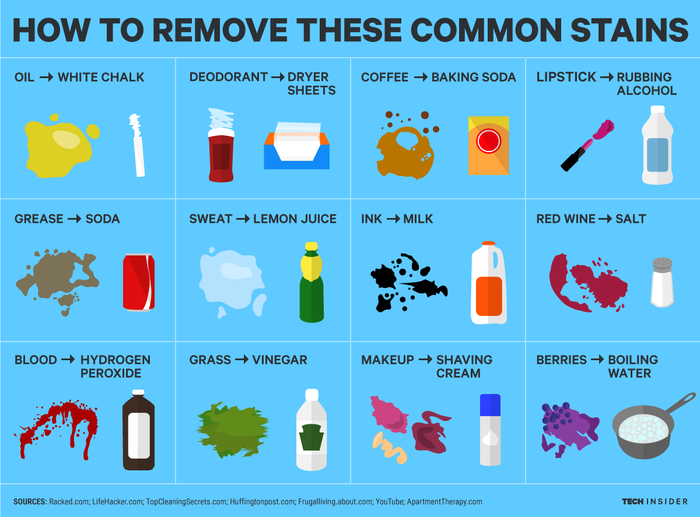
While a spilled cup of coffee in the morning can seriously impact your whole day, it does not have to spoil your favorite fabrics forever. Coffee stain appears very quickly and causes difficult-to-get rid-of dark brown discolouration due to the fact that the drink consists of such natural substances as organic compounds called tannins. The most important thing when treating coffee stain is the speed at which you will start removing the stain – the sooner you begin to deal with the issue, the better for the outcome. To begin with, blot the area with a clean and white cloth or paper towel as rubbing will only aggravate the situation and push the liquid further into the fibers. After that, let the cold water pass through the back of the stain during several minutes in order to rinse out the majority of the liquid from the inside. In case you are treating cotton fabrics or linens, prepare a solution by using a few drops of dish soap, one tablespoon of white vinegar and two cups of warm water. Put the mixture right on the stain and leave it there during five to ten minutes and then sponge it away. When you have an old coffee stain on the carpet or upholstery, you can try treating it by using the paste of baking soda and water, letting it dry and vacuuming. Finally, wash the clothes normally, but do not forget to check whether the stain is totally gone because heating will spoil your efforts.
Among the most frequent stains found on clothes, carpets, sofas, and other household surfaces, coffee stains are the ones that can be easily noticed on light fabrics and furniture. As it is with any other stain, however, the sooner you will try to remove coffee from your clothes or furniture, the easier it will be to get rid of it.
In case of fresh coffee stains found on washable clothes, first of all, take a clean piece of fabric or a paper towel and gently apply it to the stained area. Do not rub too hard since rubbing can only spread the stain. Rinse the area with cold water from the back of the fabric, if it is possible, and apply some liquid laundry detergent or mild dish soap to the stain and gently rub it in the fabric. Let the stain sit for several minutes and then proceed with regular wash.
In case you have to deal with carpets and upholstery stained with coffee, begin with carefully blotting the stain with the help of absorbent fabric. After that, apply a mixture of a little amount of mild detergent diluted with some water and then gently dab the area.
It is important to know that if coffee contains milk or cream, it should be cleaned immediately since otherwise, the unpleasant smell left by dairy residues might appear later.
Before applying any cleaning solutions to your clothes or furniture, make sure to consult care labels of the items. If you act in time and correctly, you will manage to deal with coffee stains at home easily.
Grease
One of the most famous stains is caused by grease and oil, which may appear as a result of a kitchen mishap, falling on fast food, or even a bicycle chain. As grease is hydrophobic, meaning that it does not dissolve in water, the use of regular laundry will not help to get rid of grease and may even cause the substance to settle in the fabric. The trick of removing a grease spot lies in the use of the substances that quickly and effectively destroy lipids. If you have recently acquired a grease spot, the first step that needs to be taken is absorbing excess oil with baby powder, cornstarch, or baking soda. Let it sit for about fifteen minutes, and then brush the powder off. In order to move to the next stage, you should definitely use liquid dish soap that is made specifically for getting rid of kitchen grease. Just apply several drops of this product to the spot and gently massage it using an old soft toothbrush. This process will make the oil molecules water-soluble. Leave it for ten minutes and rinse the area with the hottest water according to the fabric’s care instructions. After that just launder the clothing normally. Make sure that you dry the item out first to check that the dark circle is gone before putting it into a dryer.
Ink Stains
It may be difficult to get rid of ink stains from various surfaces. Such marks can become quite unsightly if they get on clothes, furniture, carpets, and other household items. The best thing to do is to take immediate steps to clean up a stain before it dries out and starts to spread.
If the stained item can be washed in the washing machine, start with putting the clean cloth or paper towel under the stained area to absorb the moving ink. Blot, rather than rub, the stain with another clean cloth. It may be possible to use a small amount of rubbing alcohol to remove the stain, but it should be first applied on a small inconspicuous spot to make sure that it will not discolour the material. When blotted, the ink should be absorbed in the cloth put under the stained spot, and the latter should be replaced when soaked. Then rinse the stained fabric and wash it as usual.
For carpets and upholstery it is recommended to use a similar procedure of blotting the stain. No matter how hard the stain is, do not soak it and apply the cleaning solution gently, starting from the outer part of the stain.
Do not use any force or mix different kinds of cleaning chemicals because it might ruin the surface or generate toxic vapours. If the ink stain is big, old or located on the sensitive material, it is better to consult professionals for help.
The worst thing about ink stains is that they tend to bleed really fast on fabric, meaning that what began as a minor leak from the tip of your pen turned out to be quite a large stain. No matter whether you had it from a leaking ballpoint pen that was stored in your shirt pocket or from the line drawn by the child using markers for his art project, getting rid of ink takes a great deal of attention since you need to avoid making the stain spread even more. The main thing about ink stains is determining the type of ink that you have because water-based ink (gel pens or washable markers) can easily be removed with water and liquid laundry detergent, while permanent ink or oil-based requires the use of a solvent. In case you are trying to get rid of the ballpoint ink stain, regular rubbing alcohol or alcohol-based hand sanitizer is your best bet. First of all, put a clean paper towel under the stained piece of fabric and then start applying the rubbing alcohol right to the stain with a cotton ball – and watch the ink dissolve into the paper towel beneath. Never rub the stain since it will only make it bigger. In case you have an ink stain on such delicate fabric as leather, a light spraying of aerosol hairspray may help you remove it, but only after it has dissolved.
Food Stains
Food stains are one of the most widespread kinds of stains one can encounter at home. Sauce, chocolate, fruits and vegetables as well as some other products easily leave traces of their passage on clothes, carpets, sofas and tablecloths. Some of the food stains have oil content in them and others have vibrant colors. Fast treatment of such stains is the most efficient approach in order to prevent the stain from becoming permanent.
The first step is removal of the solid food particles with the help of a spoon or the edge of a dull knife. It should not be rubbed into the fabric since it will make the stain larger and harder to get rid of. In case of washable fabrics, rinsing the stained area with cool or lukewarm water depending on the care instructions should be carried out. Applying liquid laundry detergent to the stain and letting it act there for several minutes is recommended as well as subsequent washing of the fabric according to the instructions.
When it comes to grease food stains, application of a small amount of dishwashing liquid can be necessary to eliminate the oil. In case of carpet or upholstery fabrics, removal of the remaining food particles and blotting the stain with a clean cloth is needed. Detergent solution can be applied to the stain without saturating the fabric. Prior to the stain treatment, one should test it on an inconspicuous place to avoid disfiguring or damaging the fabric.
Strong colors of some food stains, for example, tomato sauce or berries, can cause troubles when trying to eliminate them. In such cases the use of heat should be avoided prior to elimination of the stain because it might fix it into the fabric. Repeated application of the stain elimination technique should be chosen instead of rubbing.
Carpet Stains
Carpet stains may affect how neat an otherwise clean room looks, particularly when the stains result from spilling coffee, food, mud, grease or any other substance. The fast absorption rate that carpets have means that it is advisable to deal with such stains promptly so as to avoid the stains getting deep into the carpet fibers and make the cleaning process harder.
One should first of all carefully remove any solid matter from the stained area using a spoon or any other blunt tool available. In case of liquid spillage, one may use an absorbent cloth or any other blotting paper to absorb the spillage without rubbing it. Rubbing the carpet may damage the fibers and cause spreading of the stain. Keep blotting until the major part of the moisture is gone. Many times a few drops of mild dish soap together with some drops of water can serve the purpose well. Instead of pouring the soap water solution onto the carpet, apply it to a cloth and dab it on the affected area of the carpet.
In case of greasy stains, one might consider the use of some carpet stain cleaning product. One should carefully follow the guidelines given and test the product on an unnoticeable portion of the carpet before applying it to the stained area. Use a different cloth to wipe off any leftover soap from the cleaned portion and blot it dry.
It is important not to wet the carpet too much since excess moisture can make its way to the padding beneath the carpet causing problems. One should allow the cleaned carpet to dry well. Frequent vacuuming can help prevent dirt build up.
Fabric Care
Proper fabric care is vital to keep clothes, curtains, cushions, and other items clean and beautiful. A garment or other textile made of different materials should be washed or treated differently, as specific detergents and temperatures may harm the appearance and quality of the surface. Caring for fabrics properly allows keeping the favorite attire wearable for a longer time and reduces the number of dry cleaning or professional treatment visits.
Firstly, a consumer should examine the garment’s care label to understand how this or that fabric should be washed or treated. Normally, the tag mentions the necessary washing or dry cleaning temperature, specific rules, and other instructions applicable to the textile. Moreover, for stained clothes, a person should try to remove the spot as soon as possible, as dried marks are more difficult to eliminate from the fabric. The damaged spot should only be dabbed with a towel – rubbing may make it spread across the surface.
Generally, any textile needs to be washed in a suitable detergent and only with the use of recommended temperature. Moreover, it is vital to avoid excess product – in case of its overuse, the detergent may leave rough or greasy spots on the fabric. Delicate materials should be treated gently or washed by hand, whereas thicker threads may resist to higher temperatures and last longer. Hot water should not be used as it may damage sensitive fibers or make clothes shrink. Following the instruction on the garment allows achieving the best results.
Finally, washing clothes is not enough – a person should also dry them properly. Where possible, the recommended method mentioned on the care label should be used. Secondly, it is better to avoid storing damp textiles in a closed space as much as possible – instead, they should be kept in a well-ventilated room.
Whereas the removal of the stain is one key objective, the second goal is protecting the fabric itself from any form of damage that might occur through the process of cleaning. It is important to understand that there are various types of fabrics that have to be treated differently when cleaning them, because use of some of the chemicals that can remove stains can permanently damage other fabrics. Sturdy fabrics such as cotton and polyester are known to withstand strong treatment and hot water and even acids such as white vinegar and lemon. On the contrary, delicate natural fabrics like silk and wool will get weakened due to use of strong detergents and enzymes since they are highly sensitive to changes in temperature and pH. It is advisable to test any stain remover on a piece of fabric before applying it all over a garment since some might damage your precious pieces of cloth. For example, it is recommended to test any chemical or solution to check whether it will cause color bleeding before cleaning the entire fabric. It is wise to avoid use of chlorinated bleach since it turns white fabrics yellow and it can destroy artificial fabric.
Don’t miss this related post:
8 Effective Tips For A Dust-Free Home
7 Easy Ways to Reduce Dust Inside Your Home
How to Clean a Microwave Properly: 8 Easy Tips
House: How to Clean Your House Quickly – 7 Proven Tips
Conclusion
Removing hard-to-treat stains from fabrics at home is a surprisingly easy task if you know how to deal with them in due time. Whether it is coffee, grease, ink, food, or carpet, a trace of a foreign substance on a textile surface should be taken care of as soon as possible after it has occurred. It is necessary to take specific measures depending on the type of stain and the material of which the fabric is made. It is better to avoid aggressive means of cleaning and start with less harsh ones, following the instructions that come with them.
Each type of stain requires a unique treatment, thus, for example, coffee and food will respond to one method, while gasoline and ink – to another. In turn, fabrics made of different materials shrink or swell when wet, so they need to be treated with special care. Carpet and other floor coverings also present specific challenges in that they hide a thick layer of fibers underneath, which can absorb the stain’s components.
The key to stain removal and prevention is looking after the textiles in one’s care rather than treating them with harsh chemicals and aggressive rubbing motions. One should always take measures to ensure that a stain does not become permanent by first of all reading care instructions, using special cleaners, and not over-drying fabrics. It is a good idea to test any cleaning product on a small spot before attempting to remove a stain with it.
Finally, when it comes to removing stubborn marks, one should also bear in mind that it is not always necessary to try and remove it oneself. Harsh measures, aggressive rubbing, and hot water might make matters only worse. Large, old stains on delicate, precious, and costly fabrics deserve a more experienced approach, which only a trained specialist can provide.
There is no doubt that with some patience and effort, almost any stain can be removed at home using simple means. At the same time, the regular care and treatment of textiles according to the manufacturer’s instructions will prevent most of them.



Pingback: 8 Effective Tips For A Dust-Free Home - hometipsy.com