
Introduction
Electricity is an integral part of any house nowadays, serving various purposes, including lighting, cooking, heating, cleaning, and many others. While residential electrical installations are built to function without much trouble, careless behavior or faulty equipment may cause several serious safety problems, such as electric shock, overheating, short circuiting, and even fire.
Most electrical accidents happen due to small but often unnoticed reasons that may cause severe consequences. Such problems as overloading outlets, damage to cords or plugs, putting electrical appliances close to water, using extension cords excessively, and trying to fix electric installations without any experience may be considered typical issues. They can be made worse by ignoring such symptoms of a problem as burning smell, sparks, buzzing sounds, or overheated outlets.
However, it is possible to prevent most electrical accidents without any special actions and changes to the household. Checking cords and plugs regularly, following the guidelines of appliance usage, maintaining electrical equipment from any moisture, and avoiding overloaded outlets may be enough to solve the problem.
Sometimes it is necessary to know when the problem needs the intervention of an experienced electrician.
It is also necessary to think about such safety aspects as children and pets, who may pull cords or play with electrical outlets.
The list of tips that will be described in this guide will include the most common electrical safety issues and simple ways to avoid them.
Overloaded Outlets
The overload of outlets is a common error that can raise the risk of overheating, electrical problems, and even fires. The outlet is intended to carry a specific load. Connecting many electrical appliances or high power units to one outlet or power strip creates a load which is too high for the electrical circuit. In spite of the number of sockets in the power strip, this does not mean that the circuit is capable of supporting all appliances connected to it.
Some types of appliances, including heaters, air conditioners, microwaves, kettles, and certain kitchen equipment use much electricity. It is better not to connect many high power appliances to one socket or extension cord. Always adhere to the manufacturer’s recommendations for outlets, power strips, and extension cords.
The indications of an overloaded electrical circuit include the heating or discoloration of outlets, odor of burning, buzzing, flickering lights, and often trips of circuit breakers. All these signs cannot be neglected. Stop using the equipment and, if required, call a professional electrician to examine the electrical system. Do not reset the breaker again until you find out the reason for its trip.
It is necessary to understand that extension cords and power strips must not be used as permanent substitutes of the electrical outlets properly installed. It is not recommended to connect one extension cord or power strip to another. Extension cords must be fixed in such a way that they are not damaged, pinched, and get wet.
It is useful to check the devices plugged into outlets and distribute suitable low-power appliances on different electrical circuits. At the same time, it must be remembered that plugging the plug into a different, nearby outlet will not solve the problem since several outlets can be connected to one electrical circuit.
In case of doubt concerning the capacity of the house electrical system and necessity to install additional outlets, it is necessary to consult a professional electrician. This specialist will analyze the situation and make appropriate recommendations.
It is simple to avoid overloaded outlets. Following recommendations and observing safety measures will allow you to decrease the risk of unnecessary hazards.
Damaged Cables
It is crucial to pay attention to damaged electrical cables, which are a common safety risk around homes. Such cables can get damaged as a result of regular use, bending, crushing, pulling, heat, moisture, or exposure to sharp surfaces. The danger with a damaged electrical cable is that the wires inside can get exposed causing electric shock, short circuits, overheating, or even fire.
It is essential to regularly check the cords of household appliances, chargers, extension leads, and other electrical devices. It is recommended to look for the following issues with the electrical cables: cuts, cracks, exposure of the wires, melting of the insulation layer, loose plugs, or signs of excessive wear.
It is crucial to stop using the appliance or the electrical device in case of noticeable cable damage. It should be remembered that wrapping the wires with a usual tape and continuing to use the cord is not enough since there is a risk of electric shock. Furthermore, one should avoid trying to twist or bend a damaged cord in order to continue its usage. The most advisable way would be either to replace the damaged cord or fix the electrical device with a help of a professional.
It is essential to keep the electrical cables away from heat sources, moisture, sharp edges, and places, where they can be walked on or crushed. One should avoid placing heavy furniture on the electrical cords and also not run cables in places where they can get damaged. In case of unplugging an electrical device, it is advised to hold the plug.
Moreover, children and pets can damage cables, by pulling or chewing them. Thus, it is essential to secure the accessible cords and check them regularly. Chargers and small electrical cables should be kept in a safe place when not in use.
Sparks, burning smell, excessive heat, buzzing, or flickering are serious warning signs, and one should take action by disconnecting the device from electricity only in case it is safe to do so and asking for professional help when it is required.
Extension Cords
Extension cords are handy if there is a lack of an electrical outlet in a place required for an appliance. Nevertheless, their incorrect application can lead to many hazards. First of all, an extension cord should not be substituted for a regular electrical outlet which is installed properly. In general, one should use extension cords appropriately and according to the electrical rating and manufacturer’s requirements.
An inspection of extension cords before use is important. One should check whether there are any damages such as cuts, exposure of wires, or broken insulation. Also, it is recommended to check whether the plug is loose or not. A damaged extension cord should not be applied as it may result in an electric shock, overheating, or even fire. One should make sure that the extension cord is suitable for the appliance to be plugged in. The devices which have high power consumption usually require a properly rated connection, and thus, such devices should not be connected to an inappropriate extension cord.
Moreover, extension cords should not be connected to each other. Also, it is dangerous to plug a power strip into an extension cord unless both the equipment is specially designed and rated for this usage. Such practices can increase the electrical load. There is always a risk of overheating or damaging of the cable. In addition, one should not exceed the maximum load of an extension cord or power strip.
The positioning of extension cords is also an important issue. Extension cords should not be placed under carpets, rugs, or any other heavy objects since they may damage the cable because of pressure and trapping of heat. An extension cord should not come in contact with water, hot surfaces, sharp objects, and any places from which people can trip. If one needs to use an extension cord in the area where there is the movement of people, it should be properly secured without any damage to the cable.
Outdoor extension cords should be used only when it comes to their special design and rating for outdoor usage. It is also necessary to protect connections from moisture and apply manufacturer’s safety recommendations.
In case if an extension cord is not used anymore, one should unplug it safely. It is recommended not to pull an extension cord from an electrical outlet or wrap it too tight to prevent the damage of the insulation.
Wet Areas
Water and electricity may be a deadly mixture. This is why wet zones like bathrooms, kitchens, laundries, outdoors and other wet places must be taken into account when thinking about how to increase electrical safety. Moisture may contribute to electric shock especially in case electrical appliances, wires, plugs or outlets are broken down or used improperly.
Do not place any electrical appliances close to sinks, bathtubs, showers and other places with water. Do not use any electrical devices with wet hands or when standing on wet floor. Portable devices such as hair dryers, electric shavers and other similar things must be used in accordance with safety instructions provided by the manufacturer.
In kitchens one should keep electrical cords and equipment away from wet counters and sinks. In case there is spillage next to some electrical device do not touch equipment in case you run risks. Leave the spot and turn off the electricity when it is safe to do this. Clear up spills and keep electrical connections dry.
In bathrooms there are many devices that use electricity and therefore there is need to pay special attention. There are special devices that can be used in order to protect oneself from fatal electric shock. Electrical installations in wet zones should be carried out by professionals and must conform to current safety codes.
All outdoor electrical equipment should be protected from moisture. Use only the devices that were manufactured to be used outside. In case there is possibility do not use the equipment and extension cords in case there is standing water, rain, wet soil etc.
Never use broken electrical equipment in wet places. Broken plugs, exposed wires, faulty outlets, frayed cables must be fixed or replaced before the equipment is used again. One should never carry out difficult electrical works alone if he/she lacks necessary knowledge.
If all recommendations concerning how to increase safety in wet zones are followed then chances for accidents can be avoided.
DIY Electrical Repairs
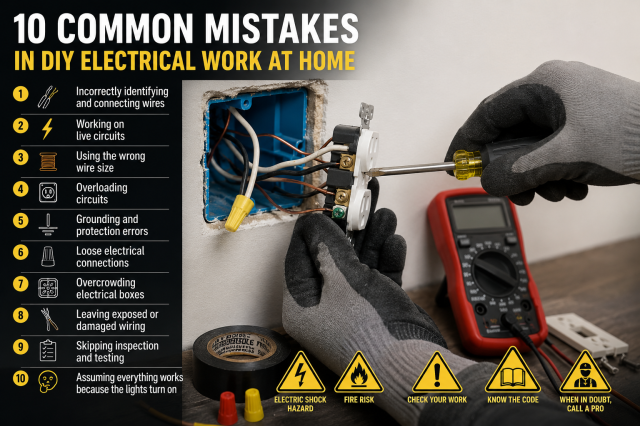
The other typical safety mistake that people make when attempting DIY electrical repairs is lack of sufficient knowledge about electrical safety. One might easily get an electric shock, burn, damage to equipment, or even cause a fire because he did not know what he was dealing with. Even the simplest jobs might seem easy but may still contain many hidden dangers due to the complexity of the electric system. People should realize what they are capable of and not to take risks.
Such simple tasks as changing a light bulb or resetting a tripped circuit breaker are acceptable when done according to the manufacturer’s instructions. Repairs concerning the household wiring, electric panel, broken outlets, creation of new circuits, and exposure to wires should always be done by a licensed electrician. Never try to do any repairs while being uncertain about disconnecting the equipment from the electrical source.
One of the typical mistakes is believing that just turning off the wall switch makes the electrical system safe. There are parts of an electrical system which will still be energized. Also, people might use inappropriate materials for doing the job, such as tape, wrong connectors or wire, or not properly rated equipment.
Do not attempt any electrical repairs while being wet or standing on a wet floor. Be sure that there are no other people in the place where you are working, especially kids and other family members. In case of the following things, do not use the device any more: sparks, burning smell, buzzing sound, trips of breakers, damaged outlet or exposed wires.
It is important to read the manufacturer’s instructions and all the local electrical rules before any kind of repair. In case you are not trained or have no proper equipment or experience, it would be better to hire a qualified electrician.
Knowledge about not making certain electrical repairs is very important.
When to Call an Electrician
Proper timing of hiring a professional electrician is an essential factor for home safety from electrical problems. There are cases when simple home tasks can be done by homeowners; however, electrical tasks connected with wires, circuits, outlets or electrical panels require professional skills and should never be done without them, as such actions can lead to electric shocks, fire, damage to the devices or creation of dangerous fault.
First of all, if there are regular trips of the circuit breakers, it indicates some problems with them. A breaker, which sometimes works improperly is not so dangerous. In case of frequent problems, it shows that there is an overloaded circuit, broken wires or malfunctioning appliance. One shouldn’t reset the breaker until one identifies the reason of its tripping. A professional will check the electrical system and find out the problem.
One should always look for professional assistance if one notices any burning smells, smoke, sparks, buzzes, heat near outlets, switches, plugs and electrical panels. It should be said about melting and discolored outlets, which mean overheating and are very dangerous. Loose, cracked or damaged outlet shouldn’t be used before checking it by professional.
Electric tasks with installing of new outlets, addition of circuits, wiring, electrical panels and reinstallation of the electrical system of household need to be done by professional electricians. They know all the standards of electrical safety and laws and will do the task properly. Also, an electrician will be able to find out if the existing wiring will be enough for new devices.
Electrical system should be checked if the electrical equipment or wiring was under the action of water. In case of flooding or major leakage one shouldn’t use the electrical system without inspection of a professional electrician.
If one isn’t sure about something in electrical system, it is better to look for professional assistance than to run into any trouble because of own negligence.
Calling an electrician timely is a way to prevent small electrical problems from becoming major. Recognizing warning signs and avoiding of complicated DIY tasks are simple but important measures for home and personal safety.
Here’s another article you may find useful:
Cable Organization: 7 Easy Tips for a Tidy Home
Home Energy Efficiency: 7 Easy Ways to Save Energy
Home Safety: 9 Essential Tips Every Family Should Know
Emergency Home Preparation: 7 Easy Ways to Stay Ready
Conclusion
To guarantee electrical safety at home, certain habits and regular inspections need to be developed as well as understanding when it would be appropriate to seek professional help. There are several mistakes people make that cause electrical accidents which could easily be avoided by simply being cautious about what you do around electrical equipment. Such actions as overloading sockets, using damaged cables, using extension cords improperly, and working with electrical devices in moist places are extremely dangerous and could cause electrocution, overheating, equipment damage, and fires.
It is very important for homeowners to regularly examine power cords, plugs, sockets, and appliances for any kind of damages. Cables with frays, burned wires, smells of burning, sparks, noises, and hot sockets must be fixed as soon as possible or taken out of service before they cause serious damage. It is not recommended to use extension cords all the time instead of installing proper outlets.
When working in places where there is a lot of moisture, additional care is needed. Devices and electrical tools must be far from any sources of water, and electrical equipment must not be handled with wet hands. Appropriate protective devices and properly installed electrical system could add additional security if it is needed.
Do-it-yourself electrical repairs could be extremely dangerous. Although some basic electrical works are rather easy, you should always call an electrician in case you do not have necessary skills to repair wiring, switchboard, install new circuit, etc. Frequent tripping of breakers, broken sockets, sparks, smoke, burning odor, or other abnormal behavior of the electrical system are good enough reasons to contact a professional electrician.
Thus, electrical safety is basically about prevention of problems before they occur. With the help of proper usage of equipment, regular inspection of the electrical appliances, avoidance of unnecessary actions and getting professional help, you will be able to ensure electrical safety of your home.



Pingback: Emergency Home Preparation: 7 Easy Ways to Stay Ready - Home Tipsy
Pingback: Cable Organization: 7 Easy Tips for a Tidy Home - Home Tipsy